“Nostalgia Blues”: Memory, Migration, and the Meaning of Home
The Blues, Black Memory, and the Meaning of Home

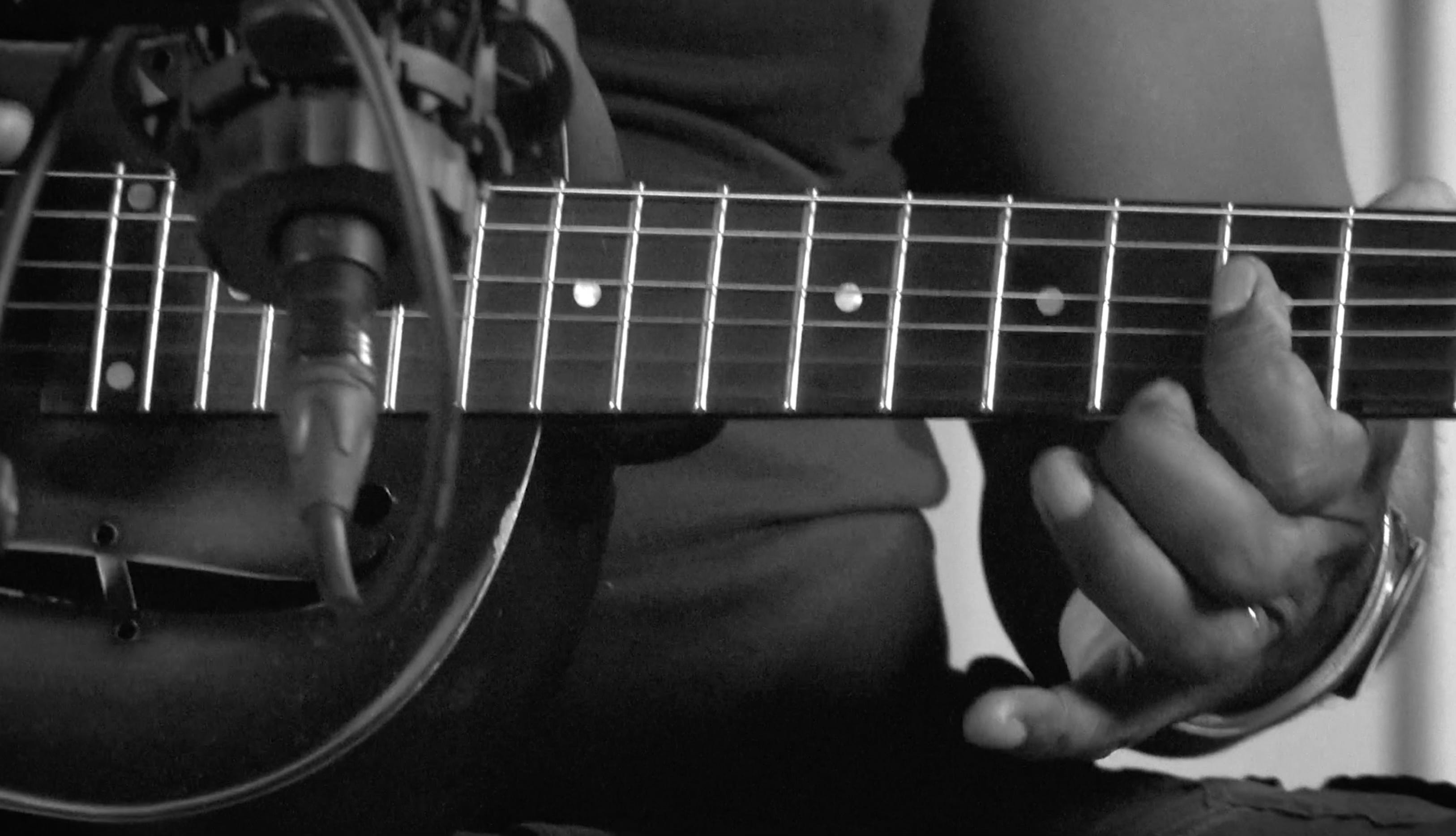
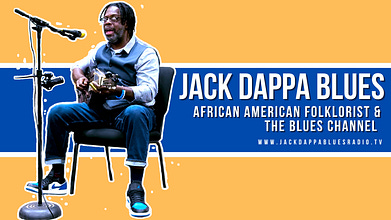
I am sharing the music video for “Nostalgia Blues,” an original song from my album and performance project, The African American Folklorist and the Blues. The video was shot by Brian Elliot, and the recording was engineered by Max Erskine.
“Nostalgia Blues” was recorded during the field-recording and documentary-filming process for the project. That context is important because the song is not separate from my work as a folklorist. It is one part of a larger effort to use Blues music, fieldwork, storytelling, and documentation to examine Black life and cultural memory.
The song addresses a familiar experience: remembering home after time, migration, and change have created distance between us and the places that shaped us. In the lyrics, the train becomes the route through which that memory is expressed. I reference the IRT Number Three train, Uptown, Brooklyn, Nostrand Avenue, curry goat, and New York State. These references locate the song within a particular Black cultural and geographic experience.
They are not general references to New York. They represent specific routes, neighborhoods, foods, sounds, and experiences that contribute to a sense of place.
Nostalgia is often treated as a simple desire to return to the past. However, nostalgia can also help us understand how people maintain relationships with places, communities, and earlier parts of their lives.
For Black people, these relationships are often shaped by migration and displacement. Families and communities have moved because of employment, housing conditions, racial violence, segregation, urban development, gentrification, and the search for greater opportunity. These movements have created new communities, but they have also separated people from familiar landscapes, institutions, businesses, neighbors, and cultural practices.
The Great Migration is one of the largest examples of this movement. Black people carried Southern music, foodways, religious traditions, language, family stories, and social practices into cities throughout the North, Midwest, and West. They built new communities while maintaining cultural and emotional connections to the places they left.
I am also a child of the Great Migration. My grandparents on both sides of my family migrated from the South, and their journeys eventually shaped where I was born and how I understand home.
On my mother’s side, my family migrated from Mississippi to Chicago and Detroit. My mother was born in Chicago. On my father’s side, my family came from Louisiana. My grandparents moved to New Orleans, where my father was born. Eventually, both sides of the family made their way to Brooklyn, New York, where my sibligs and I were born.
What makes this history even more meaningful is that the two families already knew of one another in what they called the old country. Their communities were separated by the river dividing Mississippi and Louisiana. Long before both sides arrived in Brooklyn, there was already a geographic and cultural relationship between them.
Because of this family history, migration is not an abstract subject in my work. It is part of my own story. Mississippi, Louisiana, Chicago, Detroit, New Orleans, and Brooklyn are connected through the movements of my family. “Nostalgia Blues” comes from that history of leaving, relocating, remembering, and building new ideas of home.
This process did not end with the Great Migration. Black movement continues within cities and between regions. Neighborhoods change. Families relocate. Longtime residents are priced out. Community institutions close. Places that once supported Black social and cultural life are redeveloped or renamed.
“Nostalgia Blues” reflects this larger history through one personal route home.
The train in the song is both transportation and memory.
Public transportation has played an important role in Black urban life. It played an important role in my life! Trains and buses carry people between home, work, school, church, entertainment, family, and community spaces. Over time, the routes themselves become familiar. Stations, transfers, announcements, and street exits become part of how people understand their environment.
In “Nostalgia Blues,” the Number Three train provides a recognizable path through the city. The route toward Brooklyn is connected to memories of food, neighborhood life, and belonging. The song demonstrates how an ordinary trip can hold cultural meaning.
This is one of the concerns of folklore. Folklore is not limited to old stories, rural traditions, or practices from the distant past. It is also found in the ways people describe their neighborhoods, remember local businesses, use transportation, prepare food, tell family stories, and identify the places that matter to them.
A train route can become part of a personal and community archive.
My work on Blues Ecology examines the relationship between Black people, sound, memory, labor, land, movement, and environment. From this perspective, a place is not defined only by its buildings or boundaries. It is also shaped by the people, sounds, practices, relationships, and histories found there.
The sound of a train, traffic, street conversation, church music, food preparation, neighborhood businesses, and people gathering all contribute to a soundscape. These sounds help produce a sense of familiarity and belonging.
When communities change, their soundscapes may change as well. A neighborhood can retain its name while losing many of the people, businesses, and cultural practices that once defined it. This is one reason cultural documentation is necessary. Songs, oral histories, photographs, recordings, and personal narratives preserve information that may not appear in official records.
“Nostalgia Blues” documents a relationship to place through sound. It identifies a train, a destination, a neighborhood, and a food tradition. Together, these details communicate what home means within the song.
I approach the Blues as a form of documentation.
Blues music has recorded Black experiences of labor, migration, relationships, racial oppression, economic struggle, pleasure, humor, faith, travel, and community life. It has allowed Black people to describe their conditions in their own language and from their own perspectives.
This does not mean that every Blues song must function as a historical report. It means that the Blues carries knowledge about how people experience the world.
My work as The African American Folklorist is based on that understanding. I use music, interviews, field recordings, research, and storytelling to document Black life and preserve the stories found within our communities. The songs on The African American Folklorist and the Blues are connected to that practice.
The project combines original Blues music with public folklore and cultural scholarship. Through the songs and the accompanying storytelling, I address subjects such as Black memory, folk belief, environmental experience, labor, displacement, community change, and cultural survival.
“Nostalgia Blues” contributes to this work by focusing on memory and place.
Remembering home does not require us to pretend that the past was perfect.
The places we miss may also have been shaped by poverty, racism, unequal housing, limited resources, or difficult family experiences. A neighborhood may have offered community while also existing under political and economic neglect.
The Blues gives us room to hold those contradictions.
A person can miss the people, food, music, and social life of a neighborhood while still acknowledging the conditions that made life difficult there. A person can value where they came from without ignoring why they left. A person can remember home with affection while recognizing that the place has changed.
“Nostalgia Blues” is concerned with that complicated relationship. It is about the desire to return, but it also raises questions about what we expect to find when we get there.
Is home the physical place?
Is it the people who once occupied it?
Is it the memory we carry?
Or is it the cultural knowledge that continues to shape us after the place itself has changed?
As I share the music video, I invite viewers to consider their own relationships to place and memory.
What person, neighborhood, street, train, building, meal, sound, or community does “Nostalgia Blues” bring to mind?
What has changed about that place?
What remains?
These questions are part of the larger work of cultural preservation. Remembering is not the same as documenting, but memory can be the beginning of documentation. A conversation about a neighborhood, a family member, a local business, or a familiar route can preserve information that might otherwise be lost.
I encourage viewers to watch the video, listen closely, and share what the song brings up for them.
This Substack is one of the places where I continue the scholarship connected to The African American Folklorist and the Blues. Here, I write about the ideas, histories, fieldwork, recordings, and cultural questions behind the music.
Paid subscriptions help support the research, documentation, writing, interviews, field recordings, archival work, and independent cultural programming that make this work possible. They also allow me to share more of the process behind the songs and the larger body of scholarship from which they emerge.
I am also taking booking dates for The African American Folklorist and the Blues, a performance and storytelling program for festivals, schools, libraries, museums, universities, cultural centers, and community events.
The program combines original Blues music with discussion of Black folklore, migration, memory, labor, landscape, soundscape, and cultural preservation. It can be presented as a concert, lecture-performance, educational program, or community conversation.
For booking inquiries, message me or contact:
lamontjackpearley@jackdappabluesradio.tv
Watch the video. Listen to the song. Reflect on the places that shaped you. Then consider how those memories might be preserved and shared.